

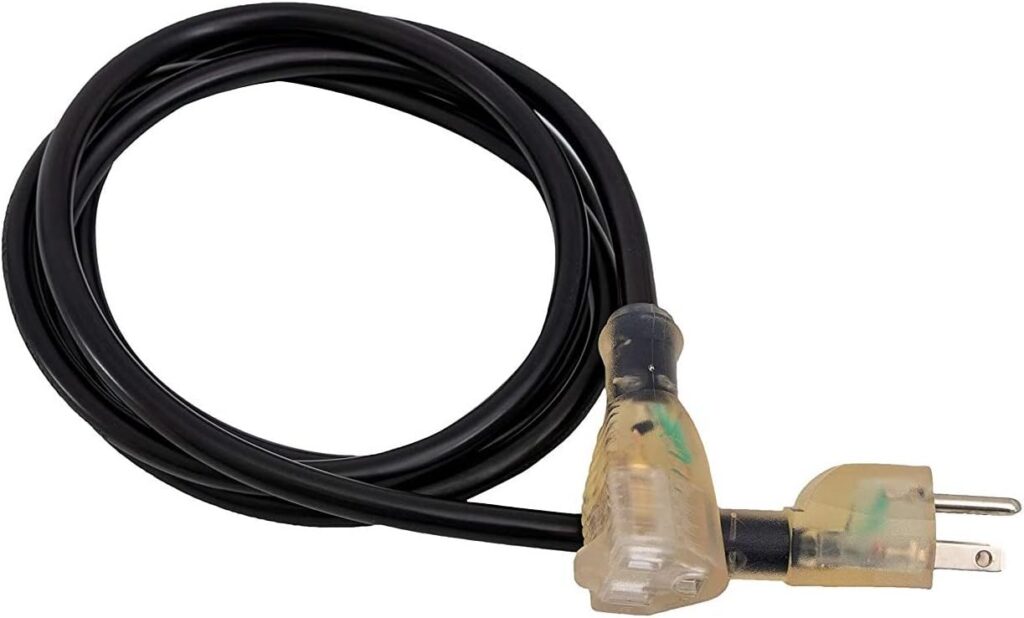
Not all EV users can use the charging cord provided by the company to charge their vehicle. Sometimes you find yourself stretching the cord to the limit and still missing a few centimeters to comfortably charge your Nissan Leaf. What do you do in such a case? Is using an extension cord safe? Can it cause damage to your Nissan Leaf? And what cable do you need if you choose to use an extension cord in the end?
The bottom line is that Nissan doesn’t recommend using an extension cord. By using an extension cord, the heat sensor on the Nissan EVSE (charging cable) that detects overheating outlets may be bypassed. The safest way to charge your Nissan Leaf is with the original cable that came with the vehicle. Under no circumstances is it advisable to use an extension cord as it is less safe and can potentially cause a fire and damage to the vehicle. If, however, you do use an extension cord, it is advisable to use a 10-gauge cable.
That being said charging at a public charging station is still the most recommended and safest way to go.
Using an extension cord with EVSEs (Electric Vehicle Supply Equipment) can compromise built-in safety features designed to minimize contact with energized conductors. Plug-in EVSEs have intentionally short inlet cords for this reason, as they are protected by the ground-fault interruption. The heat sensor is another crucial safety aspect.
While a heavy gauge extension cord might be suitable for emergency situations, relying on it for daily charging is not advisable. If an extension cord is used, it should not be tightly coiled to prevent heat buildup. The preferred approach, however, is to explore alternatives such as moving the car closer to the outlet, getting an outlet closer to the car, or opting for an EVSE with a longer cable from the box to the vehicle. These solutions are safer and more reliable for regular charging needs.
But If all else fails and you choose to use an extension cable, you should pay attention to the following points:
Choosing the Right Extension Cord Is Crucial
If opting to use an extension cord for lack of another choice, ensure it is suitable for outdoor use and matches the power requirements of your Nissan Leaf. Verify the cord’s ampere rating to confirm its ability to handle your EV charger’s current draw. In the case of the Nissan Leaf, it is advisable to use a heavy-duty, outdoor-rated 10-gauge cable for a level one charging for anything over 10 ft. You can find the right cord here. The benefit of the 10g wiring is that it offers increased thermal mass, enhancing the ability to dissipate heat effectively. When compared to the 12 gauge extension- the latter will probably heat up quickly and may even burn at the ends after a few uses, so it is advisable to stay away from this option.
Important:
While using the cord, particularly during the initial usage, be vigilant in inspecting it for any defects that potentially lead to overheating. Remember: regular sockets and extension cords, rated for specific currents, should not be used for prolonged periods near their maximum rating. Opt for a cord with a substantial margin below its maximum rating. Additionally, consider this precaution for the socket itself.
Consider the Length of the Extension Cord:
Longer cords increase the chances of voltage drop and overheating, while shorter ones mitigate these risks. It is advisable to steer clear of long extension cords to ensure safety. If you have no choice and you must use an extension cord, try to use a cable as short as possible to simply close the gap and no more.
Please take into account that your charging rate will decrease when using any extension cord. All wires experience electron loss. Longer or smaller gauge cords result in higher losses. Normal charging losses are typically around 10-15% without the use of an extension cord.
3 Tips To Keep in Mind
1. Outdoor Use
If charging outdoors, ensure the extension cord is rated for outdoor use and is designed to withstand exposure to the elements.
2. Unroll the Cord Completely
To avoid overheating, fully unroll the extension cord and avoid coiling it tightly during use, as this can lead to excessive heat buildup.
3. Avoid Daisy-Chaining
Do not connect multiple extension cords together (daisy-chaining) to reach your Nissan Leaf, as this can create additional resistance and increase the risk of overheating.
In Conclusion:
It is not for nothing that the Nissan Leaf car manual states that the proper use for charging the car is only with the cable that came with the car itself. The reason – as I mentioned in this post – is that using an extension cord can cause damage ranging from burning the cable itself to damage to the charging mechanism.
Life is life, and sometimes there is no choice but to deviate from the explicit instruction, but it is advisable to do so safely and responsibly.
I suggest, beyond the advice I already mentioned above, to personally supervise the charging: meaning. while charging, periodically check the extension cord and charging equipment to ensure everything is functioning correctly and not overheating.
Good Luck!